
Some sounds don’t just play.
They stay with you.
Some sounds don’t just play.
They stay with you.
This is especially true in electronic music and underground techno culture, where rhythm and repetition are not flaws but features. Repeating beats, subtle variations and hypnotic loops do something fundamental to the human brain: they shift attention away from conscious thinking and toward embodied experience.
Research shows that rhythmic patterns can reduce cognitive load and help listeners enter a flow-like state, where perception becomes more physical than analytical. This explains why repetitive electronic music is often described as immersive rather than entertaining. A useful overview of how rhythm affects the brain can be found here: Attention research
Movement reinforces this effect. Styles like shuffle dance are not about complex choreography or visual spectacle. They rely on simple steps, repeated endlessly, allowing the dancer to stay present and responsive to the music. Constraint creates freedom. The body follows the beat, and the mind follows the body.
This connection between music and movement is increasingly visible online. Short-form video platforms are full of repetitive dance loops paired with minimal electronic tracks. These videos perform well not because they explain something, but because they invite viewers to feel something. The success of underground dance content on platforms like YouTube illustrates this clearly: Techno shuffle dance
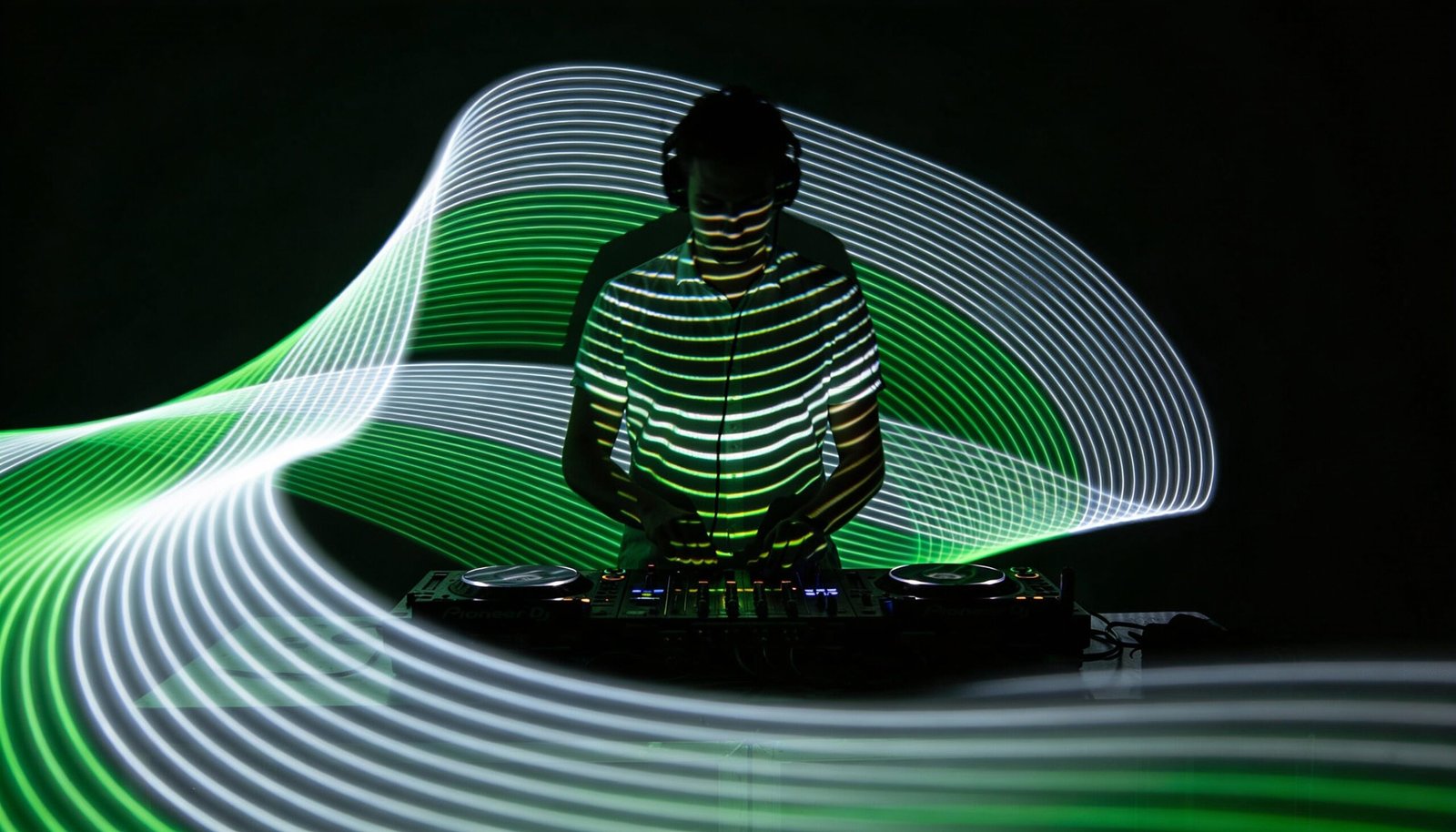
Visual design plays a supporting role. Minimal visuals, limited color palettes and clean compositions reduce distraction. When visuals do less, sound and movement can do more. This is why many electronic artists and creative brands choose understated aesthetics for album art, stage design and digital content. Minimalism is not about lack of effort, but about focus.
The broader conclusion is simple and increasingly relevant in the attention economy:
attention is not captured by intensity alone. It is earned through rhythm, repetition and restraint.
In a digital environment overloaded with information, experiences that remove friction perform better. They allow people to enter a state rather than consume a message.
This is the space I’m interested in exploring.
Not the drop. Not the climax.
But the moment just before it, where control fades and instinct takes over.
That’s where the vibe lives.